magick for everyone
Hearth + Moon is here for the witchy-curious. We approach witchcraft with open minds. We believe in the value of approaching witchcraft from multiple perspectives, including metaphysical, spiritual, psychological, and scientific. Like vines winding together up a trellis, these strands intermingle to create a lush, magickal wholeness.
a personal path
Our approach to witchcraft is eclectic - in other words, we embrace the richness of multiple traditions to enhance creativity and support personal empowerment. You’ll see nods to traditional folk magic, ceremonial magic, and other modern paths reflected in our rituals. We also have a special interest in the intersections of mindfulness + ritual.
what is a spell jar?
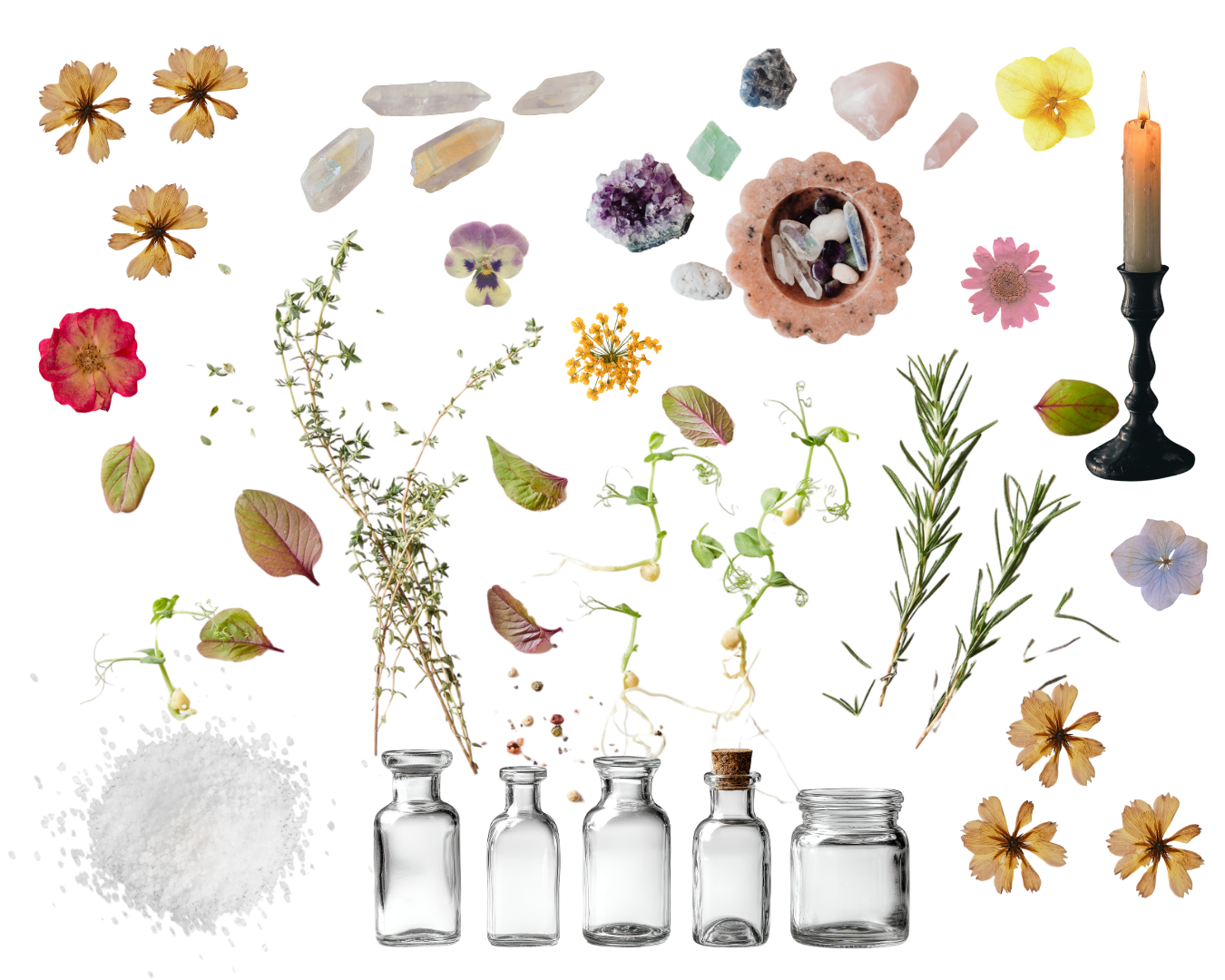
A modern spell jar is a container filled with intentionally chosen ingredients like herbs, crystals, and salts that correspond to a specific desired outcome. Jars, bottles, sachets, poppets, boxes, even organic elements like corn husks or hollowed-out fruits are used in container magic.
What matters is that the container and ingredients are meaningfully chosen to provide energy for spellwork. Choosing meaningfully may mean connecting each ingredient to a historical or magickal association, drawing on an object’s inherent or symbolic magickal properties.
Our kits are designed to support mindfulness meditation. Preparing your space, filling your jar, and using the final product as a focus object can calm your nervous system and help you connect with your body and the earth.
what to expect in our kits
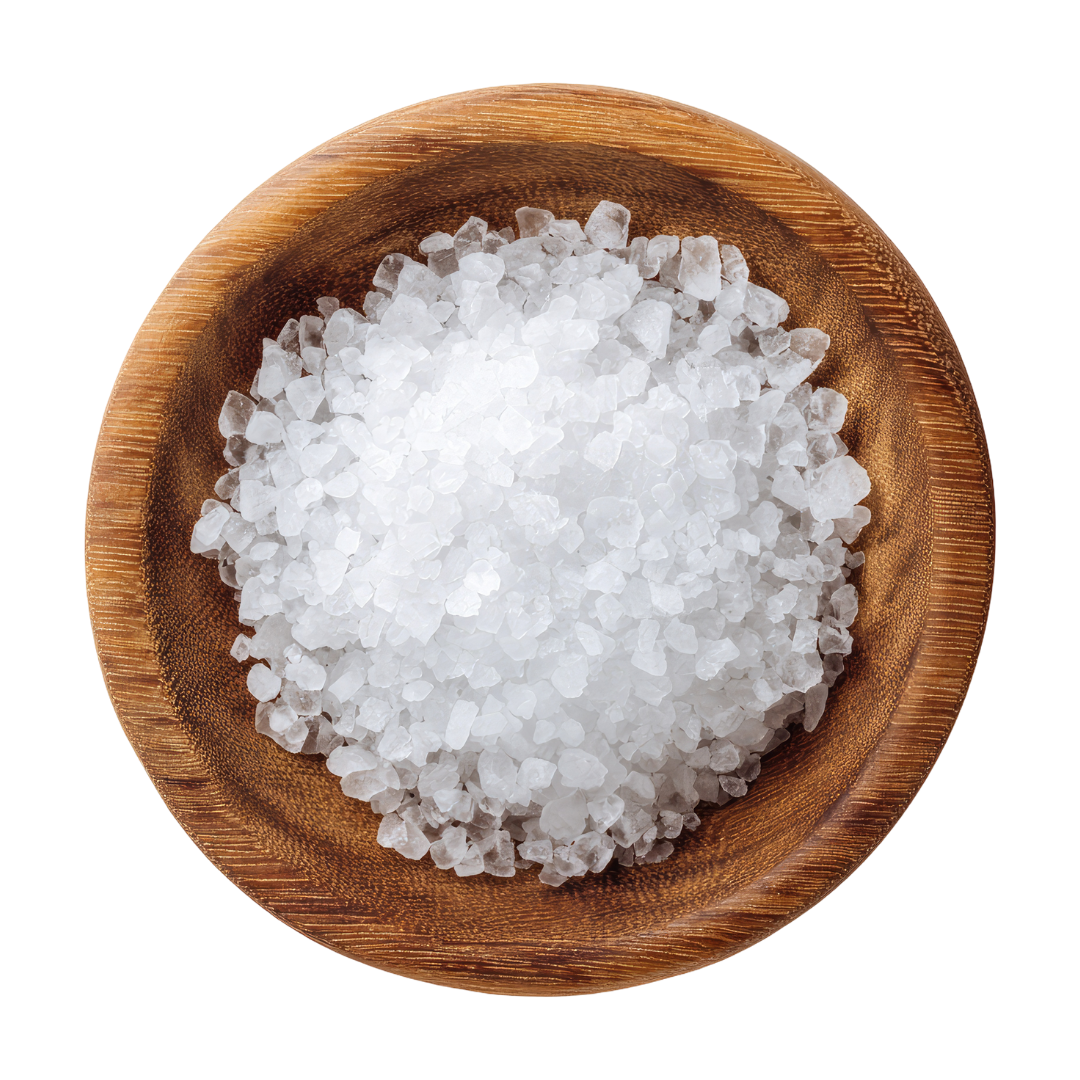
salt ~ salt has been used for purification and protection across cultures for centuries. Consider it an anchor to the physical world and a grounding force for your spellwork.
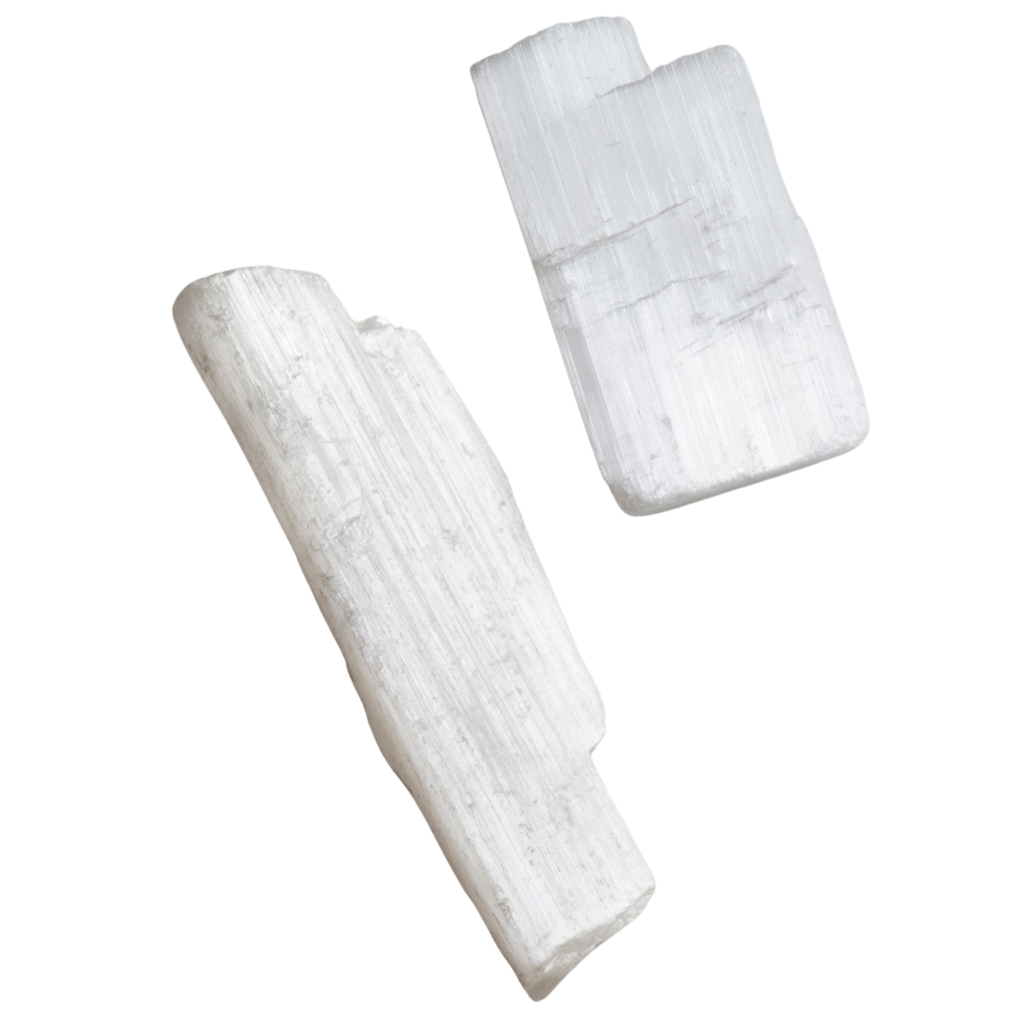
selenite ~ named for the Greek goddess of the moon Selene, in crystal healing, selenite is an energy amplifier.
Selenite is not a traditional spell jar ingredient. However, modern magick is what you make of it - you can put it in a jar, keep it as a talisman, or imbue it with your own meaning.
our spells, explained
eirene’s sanctuary ~ a spell for calm
sulis’ waters ~ a spell for cleansing
brigid’s hearth ~ a spell for creativity
euthenia’s gifts ~ a spell for prosperity
hekate’s gate ~ a spell for protection
freyja’s cloak ~ a spell for self-love
eirene’s sanctuary ~ a spell for calm
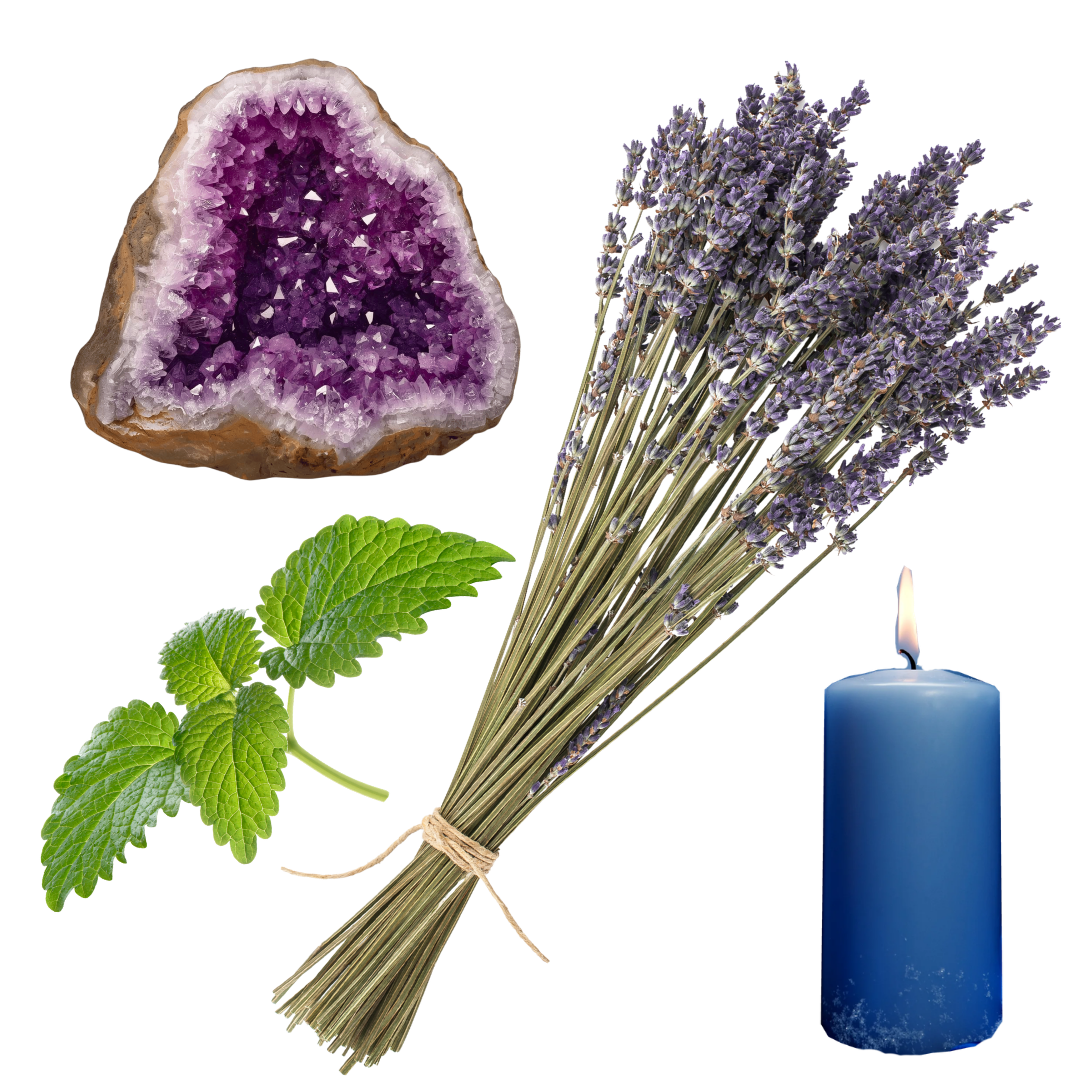
amethyst ~ In crystal healing traditions, amethyst is believed to soothe the nervous system — and while that specific claim isn't backed by science, amethyst can meaningfully serve as a focus object for calming breathwork, a technique with solid evidence for countering the fight-or-flight response.
lemon balm ~ Lemon balm is well-loved for its calming effects, and the fresh citrus scent of its crushed leaves is a mood-booster.
lavender ~ Lavender has been a go-to calming herb in folk medicine for ages, and modern science has caught up: research confirms that ingesting lavender can meaningfully reduce anxiety (and it smells good).
blue candle ~ Color magick and color psychology align here: blue is one of the most reliably calming colors, making it a natural choice for a peace ritual.
a note on the goddess of peace
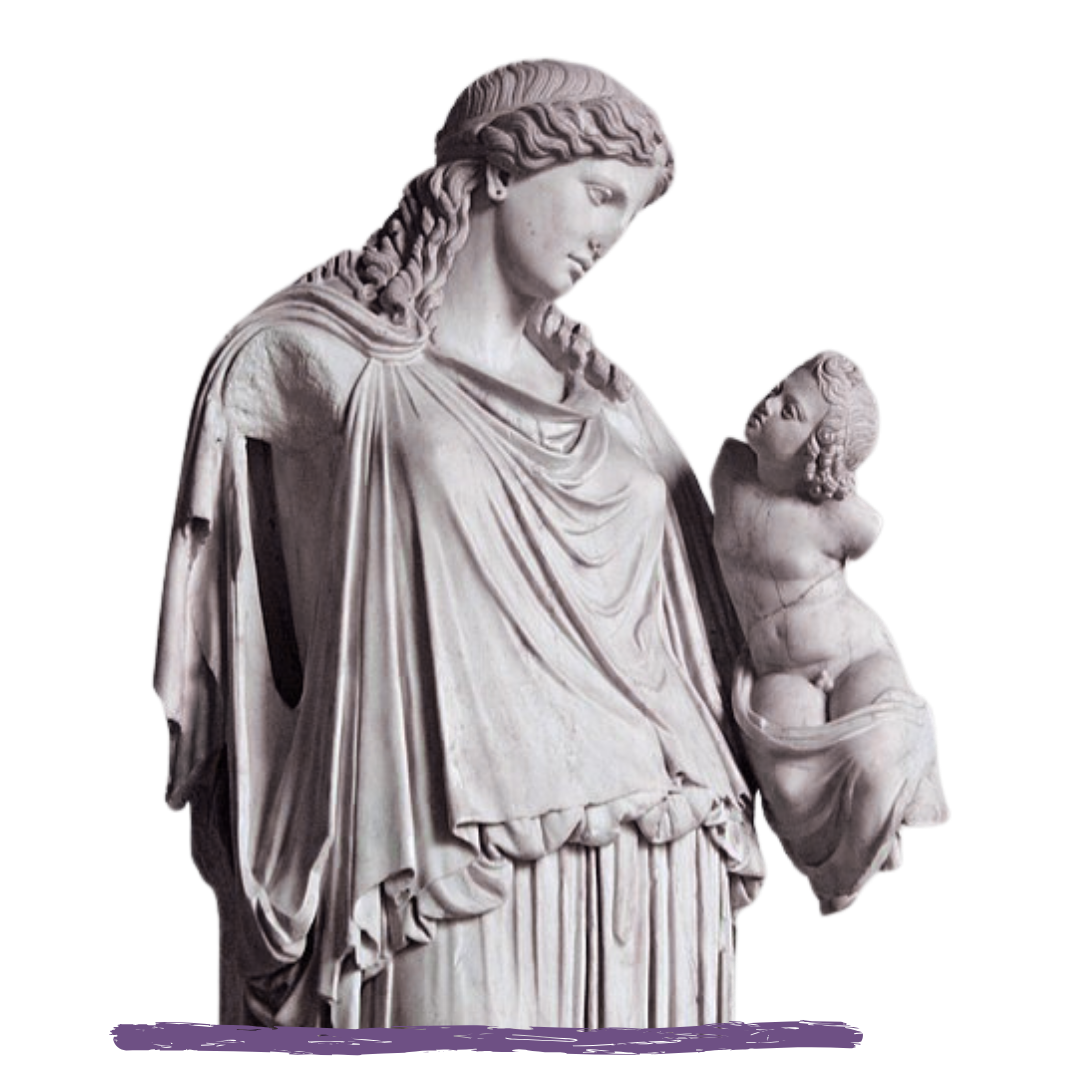
In ancient Greek mythology, Eirene is the goddess of peace and tranquility. She is one of the Horae, the divine keepers of order and harmony, and represents calm following upheaval. In classical art, Eirene is often shown gently holding the child Plutus, the spirit of prosperity, symbolizing the Greek belief that peace allows us to flourish.
Because she embodies quiet harmony, Eirene has long been associated with calm, balance, and restorative stillness. She reminds us that peace is not simply the absence of chaos, but a sacred space we create and protect within ourselves.
Sources
Theogony, trans. M. L. West, Oxford University Press, 1988.
The Routledge Handbook of Greek Mythology, Routledge, 2004.
Greek Religion, Harvard University Press, 1985.
The Oxford Companion to Classical Civilization, Oxford University Press, 2014.
sulis’ waters ~ a spell for cleansing
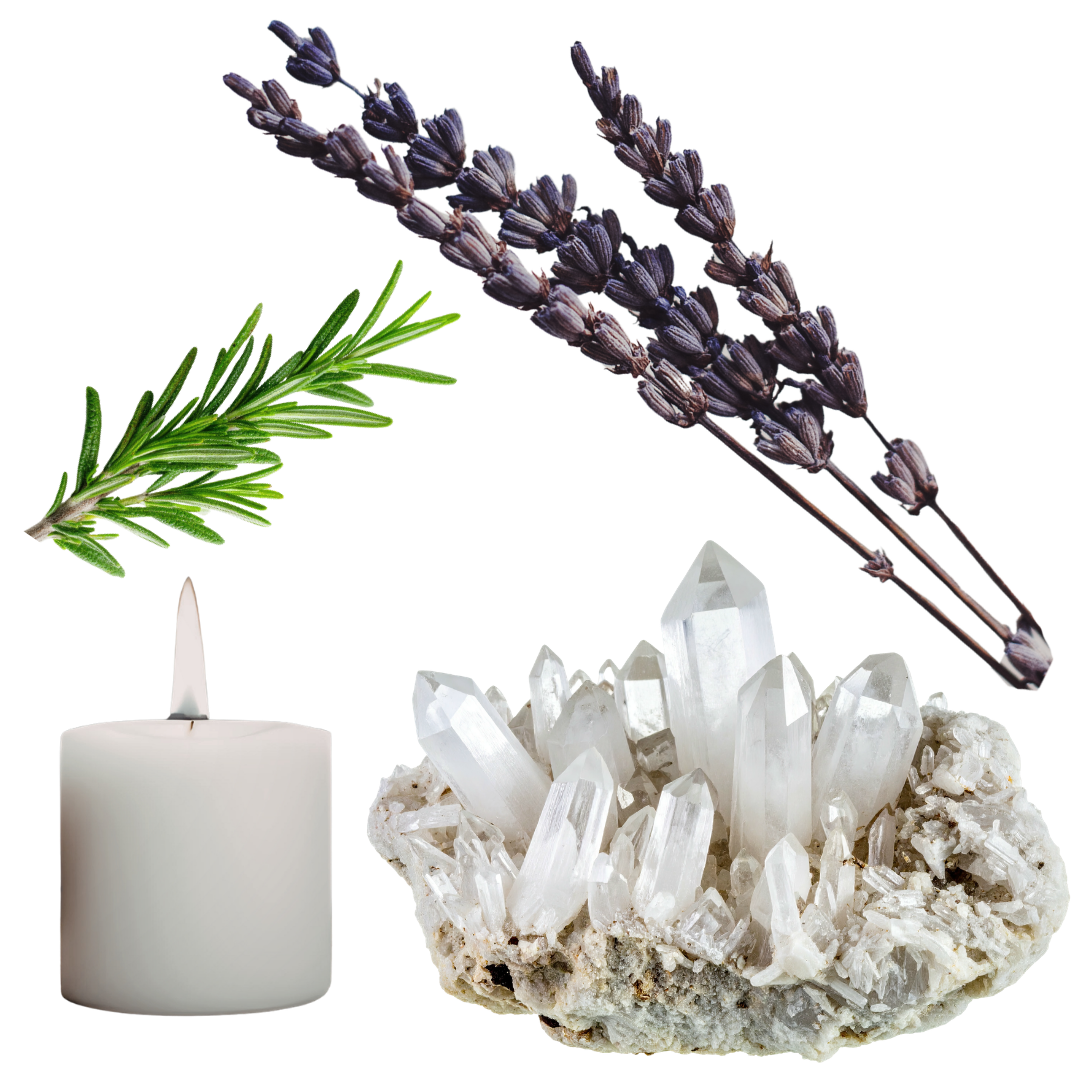
clear quartz ~ Clear quartz is your go-to crystal for a psychic reset. Try using it as a focus object, visualizing your mind, body, and spirit being washed clean.
lavender ~ Some scholars believe the word "lavender" traces back to the Latin lavare, meaning "to wash.” For centuries, it's been used in both fragrant baths and spiritual cleansing rituals.
rosemary ~ Rosemary has been considered a sacred herb across many cultures throughout history, commonly used in spiritual baths or burned to clear out stagnant energy.
white candle ~ In light physics, the color white is what your eyes see when all other colors are combined. Imagine the magick of every color coming together to give you the power you need to start fresh.
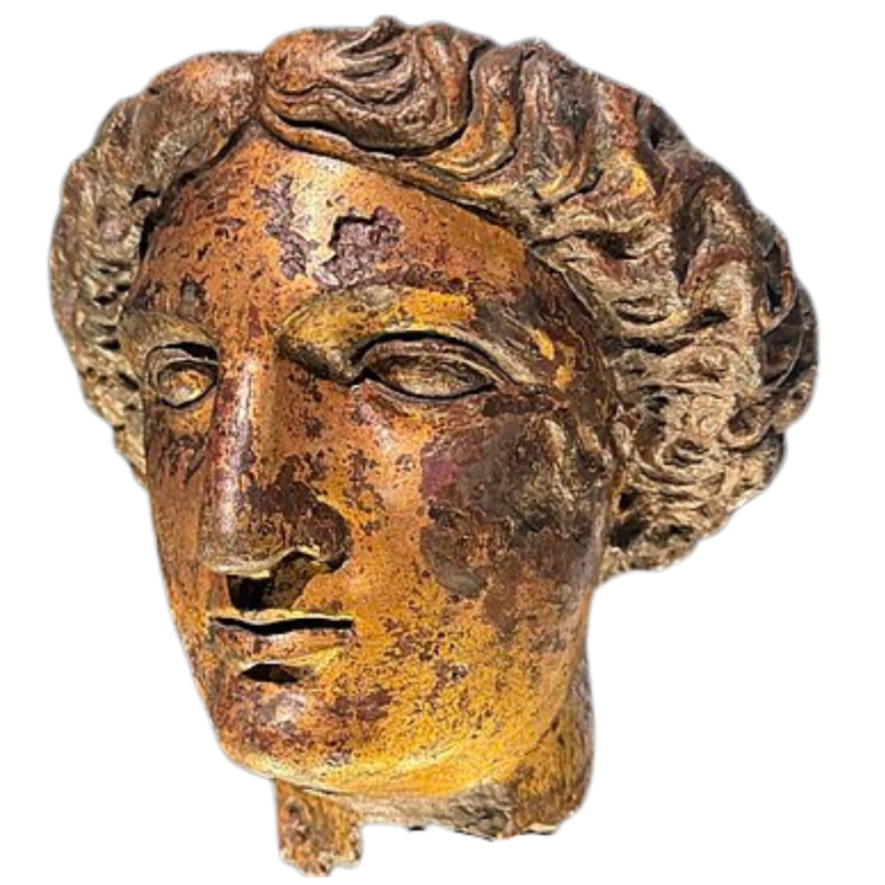
a note on the goddess of sacred springs
In ancient Celtic Britain, Sulis was a goddess of healing waters, most famously honored at the hot springs of Bath. The Romans linked her to their healing goddess Minerva, creating the temple of Sulis Minerva at the springs. For centuries, people visited these waters to bathe, pray, and leave offerings asking for healing, justice, and renewal.
Because she is so closely tied to sacred springs and ritual bathing, Sulis is often associated with cleansing, restoration, and the release of what no longer serves us.
Sources
The Celtic Gods and Heroes, Dover Publications, 2000.
Dictionary of Celtic Myth and Legend, Thames & Hudson, 1992.Religions of Roman Britain, Routledge, 1984.
brigid’s hearth ~ a spell for creativity
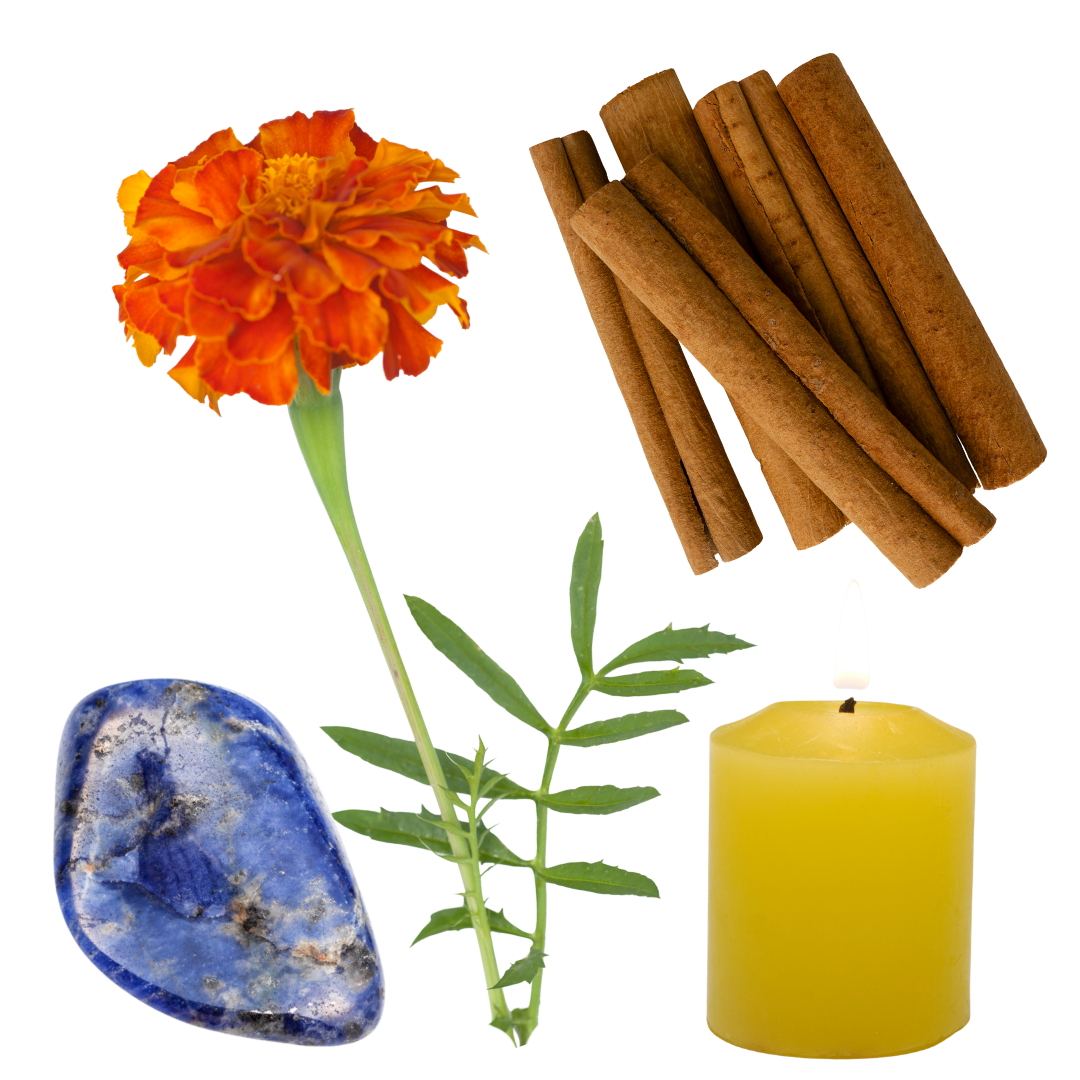
cinnamon ~ Cinnamon's natural fieriness is believed to stimulate the mind, boost focus, and open up communication. It’s a spice that gets the creative juices flowing.
marigold ~ The marigold's bold and eye-catching orange is widely associated with the power of the sun and the Fire element, a symbol of energy and creative force across many traditions.
sodalite ~ Known in modern crystal healing as the "Poet's Stone," sodalite is believed to sharpen intuition and help you unlock your most expressive self.
yellow candle ~ Yellow is one of the most mentally stimulating colors in color psychology. It’s energizing, cheerful, and here to wake up your mind.
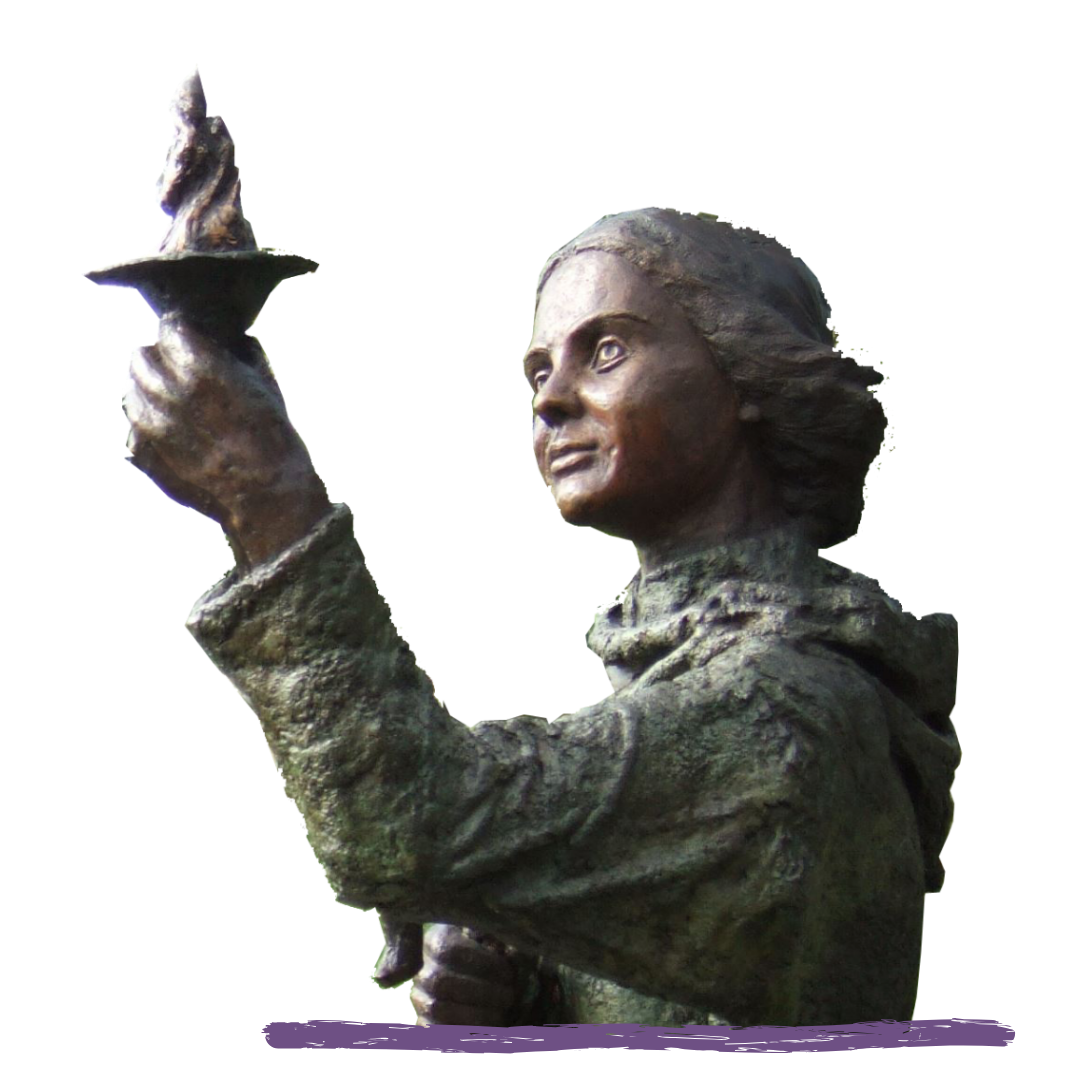
a note on the goddess of inspiration
In Celtic tradition, Brigid is a goddess of the hearth, poetry, and inspiration. In early Irish myth she is one of the great deities of the Tuatha Dé Danann and is especially honored as a patron of poets, artisans, and makers of all kinds. Her sacred flame, once kept burning by priestesses in Kildare, symbolizes the spark of imagination and the warmth of creative work shared in community.
Because she presides over poetry, craft, and the warm breath of the hearth, Brigid is often associated with creativity, inspiration, and the courage to make something new. She reminds us that creativity is both a spark and an inner fire that grows brighter when nurtured.
Sources
Celtic Mythology: A Guide to the Gods, Heroes, Rituals, and Beliefs, Oxford University Press, 2016.
Dictionary of Celtic Myth and Legend, Thames & Hudson, 1992.
The Celtic Myths: A Guide to the Ancient Gods and Legends, Thames & Hudson, 2015.
euthenia’s gifts ~ a spell for prosperity
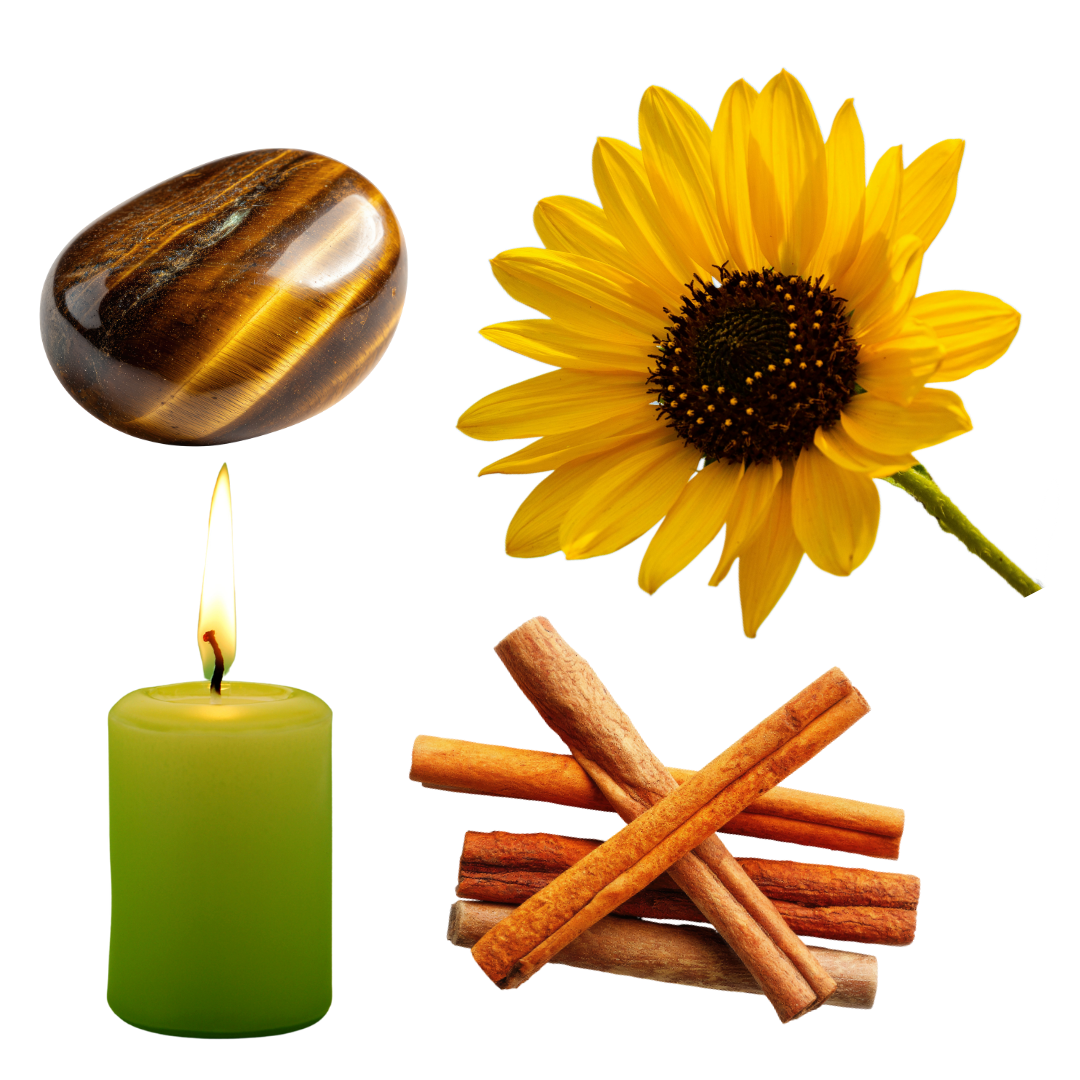
cinnamon ~ Cinnamon was once so rare and expensive that ancient civilizations associated it with wealth, and many cultures around the world still consider it a symbol of prosperity and good luck.
sunflower ~ In many Indigenous cultures of North America, the sunflower is a symbol of the sun's most generous gift: a good harvest.
tiger's eye ~ Tiger's Eye is believed to sharpen focus and attract abundance, and practically speaking, better focus tends to help you make the right moves to open doors.
green candle ~ Green is the color of the Earth element and its resources. In tarot, it corresponds to the suit of pentacles, aka the “money suit.”
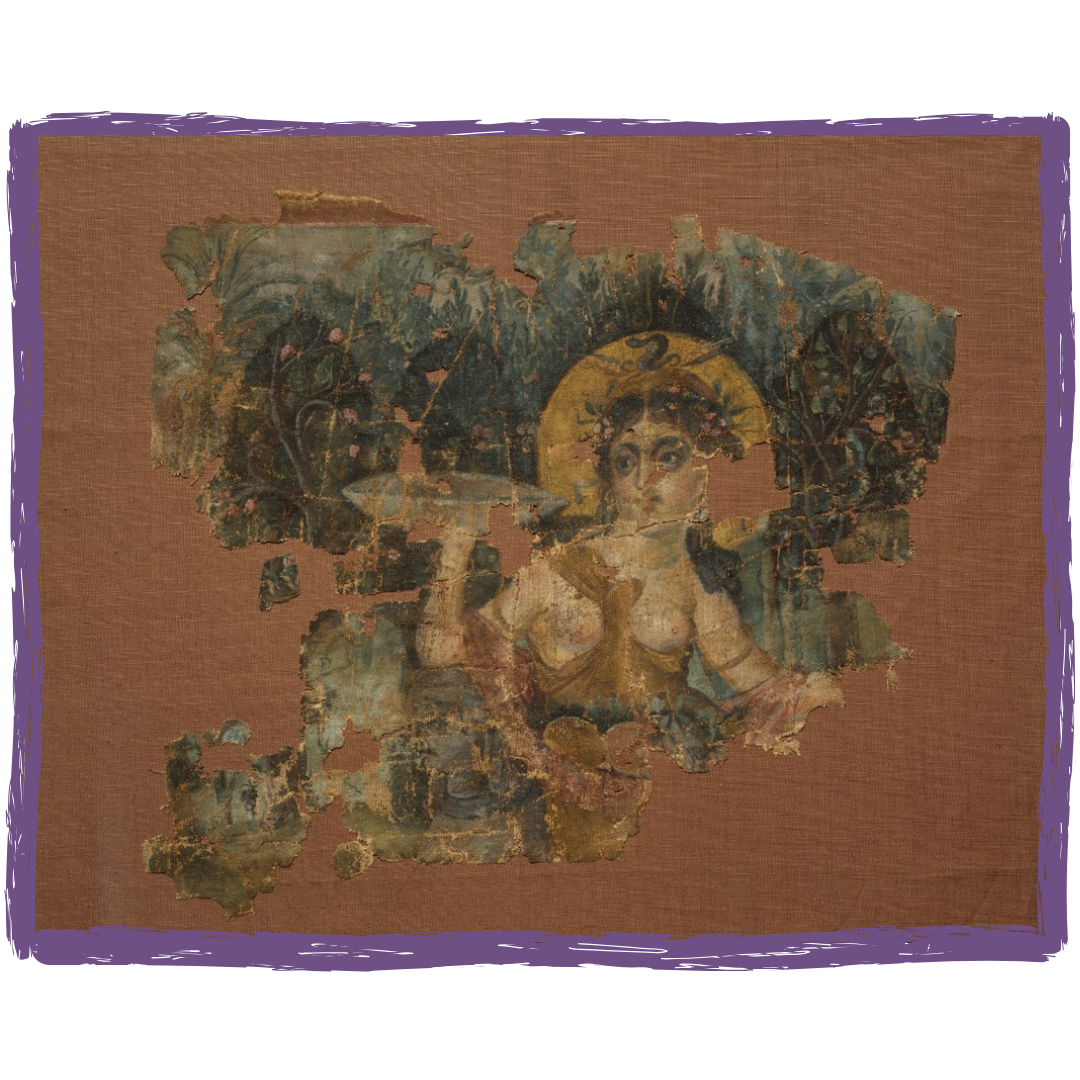
a note on the spirit of abundance
In ancient Greek tradition, Euthenia is the spirit of prosperity, abundance, and flourishing. Her name comes from the Greek word euthenia, meaning “plenty” or “prosperity.” In Greek thought, prosperity referred to more than just money; it was the thriving of crops, homes, communities, and everyday life.
Because she represents fullness and flourishing, Euthenia is associated with prosperity that grows through balance, gratitude, and care. Her presence reminds us that abundance often begins with tending what we already have and welcoming growth where it wishes to take root.
Sources
The Routledge Handbook of Greek Mythology, Routledge, 2004.
The Oxford Classical Dictionary, Oxford University Press, 2012.
Dictionary of Classical Mythology, Blackwell, 1996.
hekate’s gate ~ a spell for protection
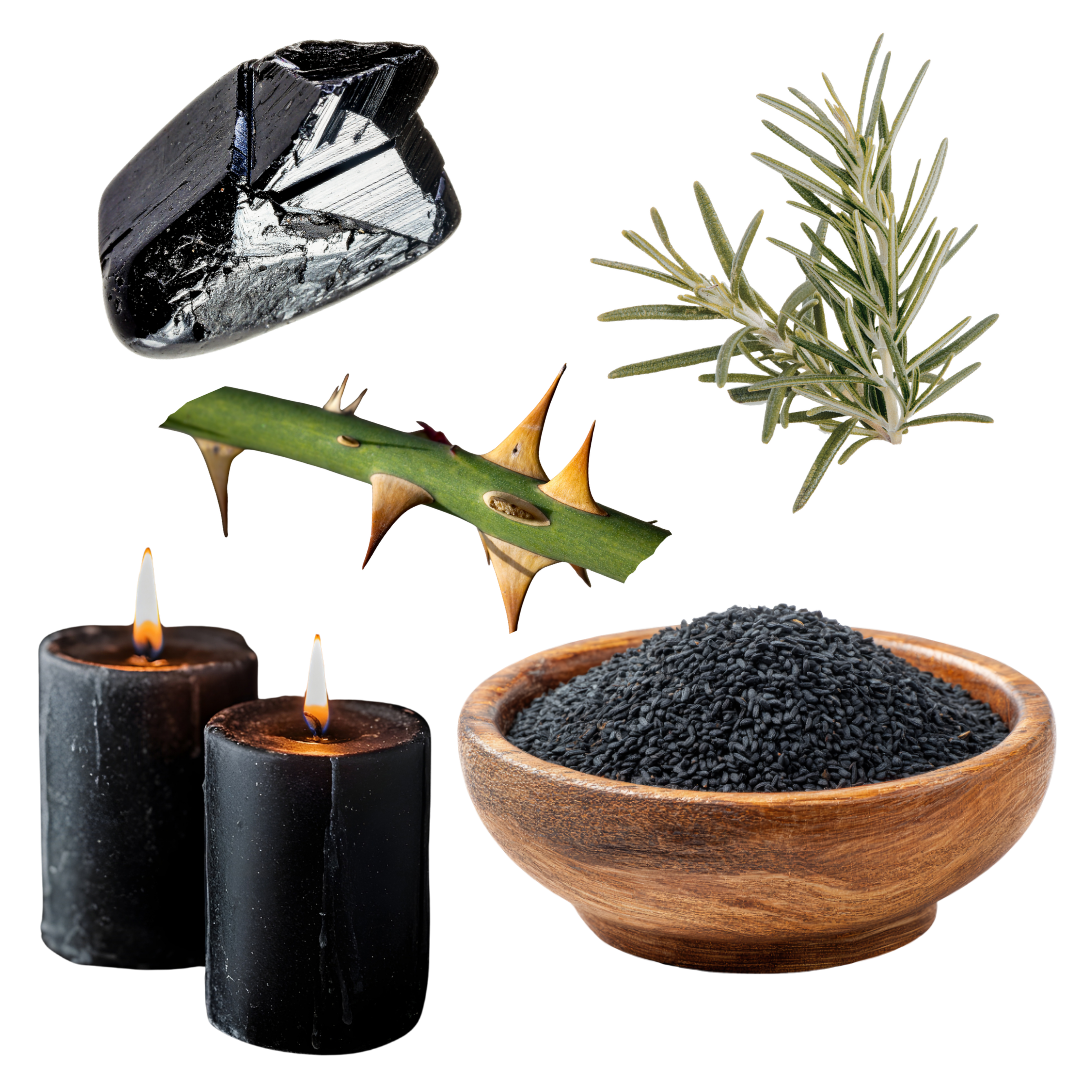
black salt ~ Like regular salt, black salt is used for grounding, but it's especially prized in folk magick for absorbing harmful energy. Traditionally, it's made from sea salt mixed with ash and/or iron, but we use sea salt with charcoal for a deeper black.
thorns ~ Just as a rose's thorns defend it from harm, the thorns in this kit serve as your symbol of self-defense and boundaries.
rosemary ~ Rosemary is a notoriously hardy herb that thrives in tough conditions. Its resilience has made it a long-standing symbol of protection across many cultures.
obsidian ~ Obsidian has been prized across cultures as a protective stone. In medieval Europe, gemstones were widely believed to shield their wearers from harm, a tradition documented across the genre of lapidaries. Use it as a focus object to visualize a shield forming around whatever you want to keep safe.
black candle ~ In some older folk magick traditions and in modern witchcraft, black candles are commonly used to ward off and banish negative energy.
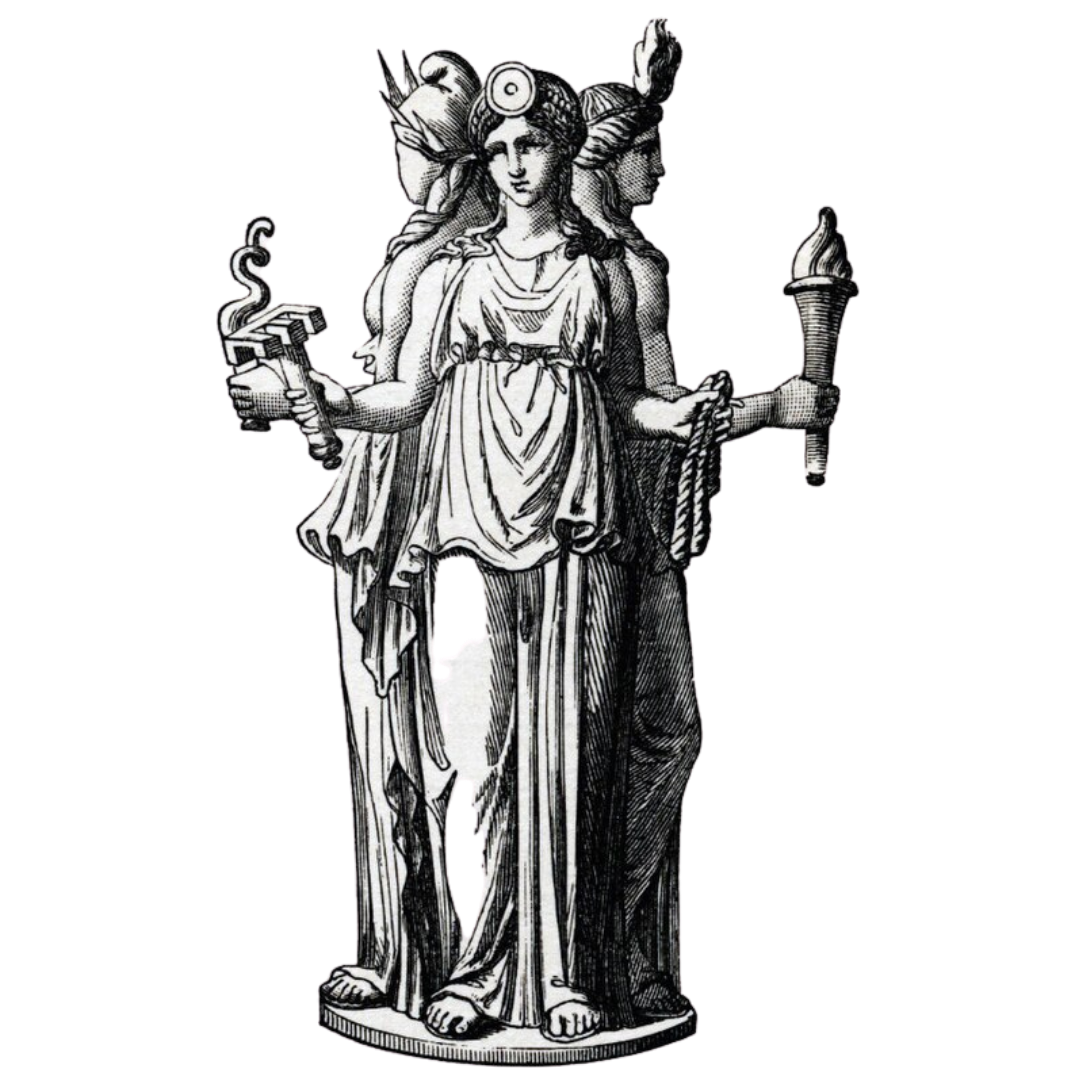
a note on the guardian of crossroads
In Greek mythology, Hekate is a powerful goddess of magic, crossroads, night, and protection. Often shown holding torches or keys, she is a guide through darkness and a guardian of thresholds, where paths become something new and sometimes unfamiliar. In ancient Greece, people honored her at crossroads and doorways, asking for protection and safe passage through the unknown.
Because she watches over boundaries and liminal spaces, Hekate is closely associated with protection, warding, and spiritual guardianship. She reminds us that we can stand firmly at the gates of our own lives. We choose what may enter and what must remain outside.
Sources
Theogony, trans. M. L. West, Oxford University Press, 1988.
The Routledge Handbook of Greek Mythology, Routledge, 2004.
Hekate Soteira, Scholars Press, 1990.
Greek Religion, Harvard University Press, 1985.
freyja’s cloak ~ a spell for self-love
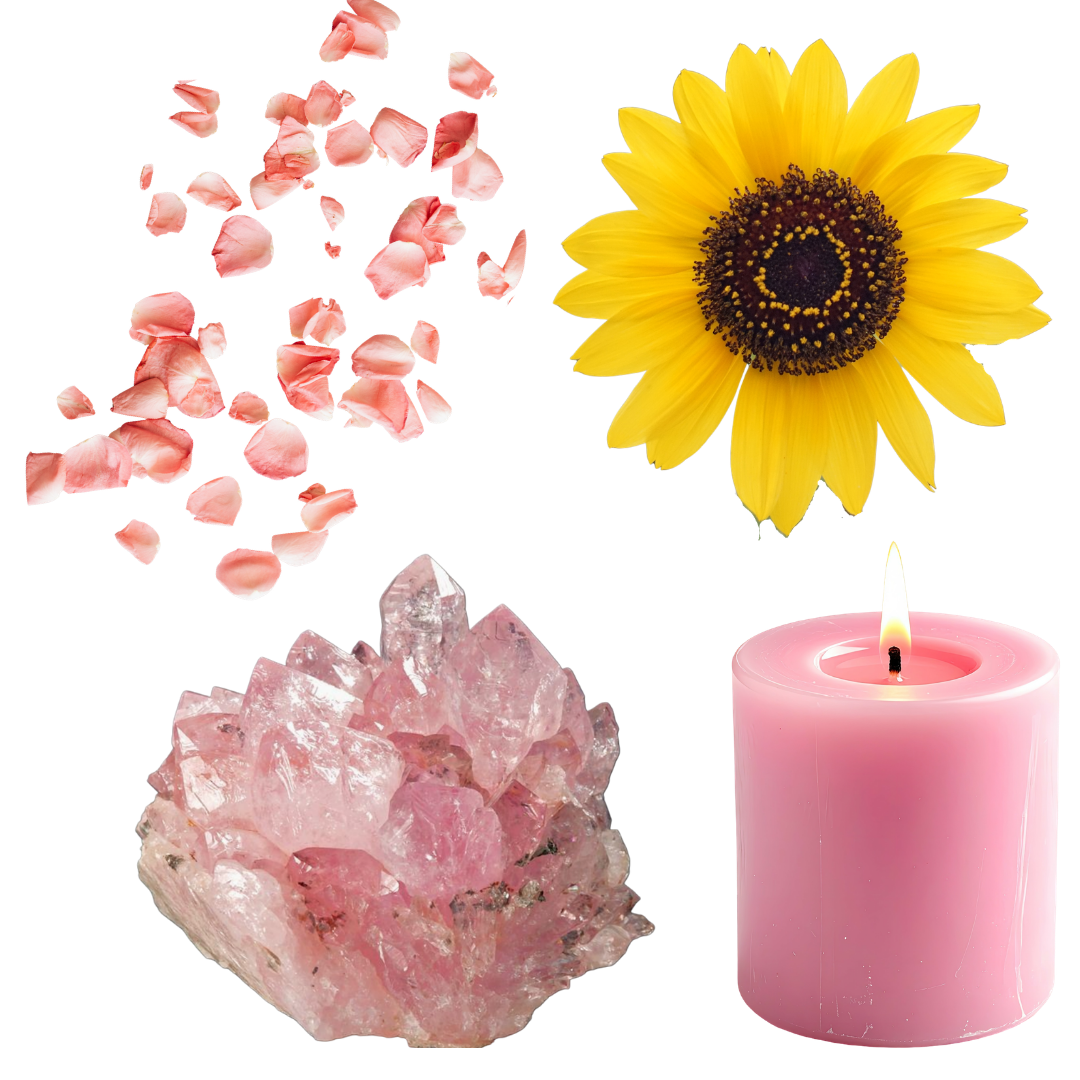
rose petals ~ In Greek mythology, roses were sacred to Aphrodite, goddess of love and beauty, one reason rose petals have become one of the most beloved ingredients in spells to attract love and to cultivate it in yourself.
sunflower ~ This solar-powered bloom has taken on many meanings over time, and in modern spiritual practice it's become a symbol of self-confidence and personal radiance.
rose quartz ~ In crystal healing, rose quartz is believed to deepen feelings of love for self and appreciation for beauty. Settle your gaze on these crystals while you imagine warm, kind feelings toward yourself.
pink candle ~ Pink candles are a staple in modern self-love rituals, used by many witches to invite in warmth, gentleness, and self-compassion.
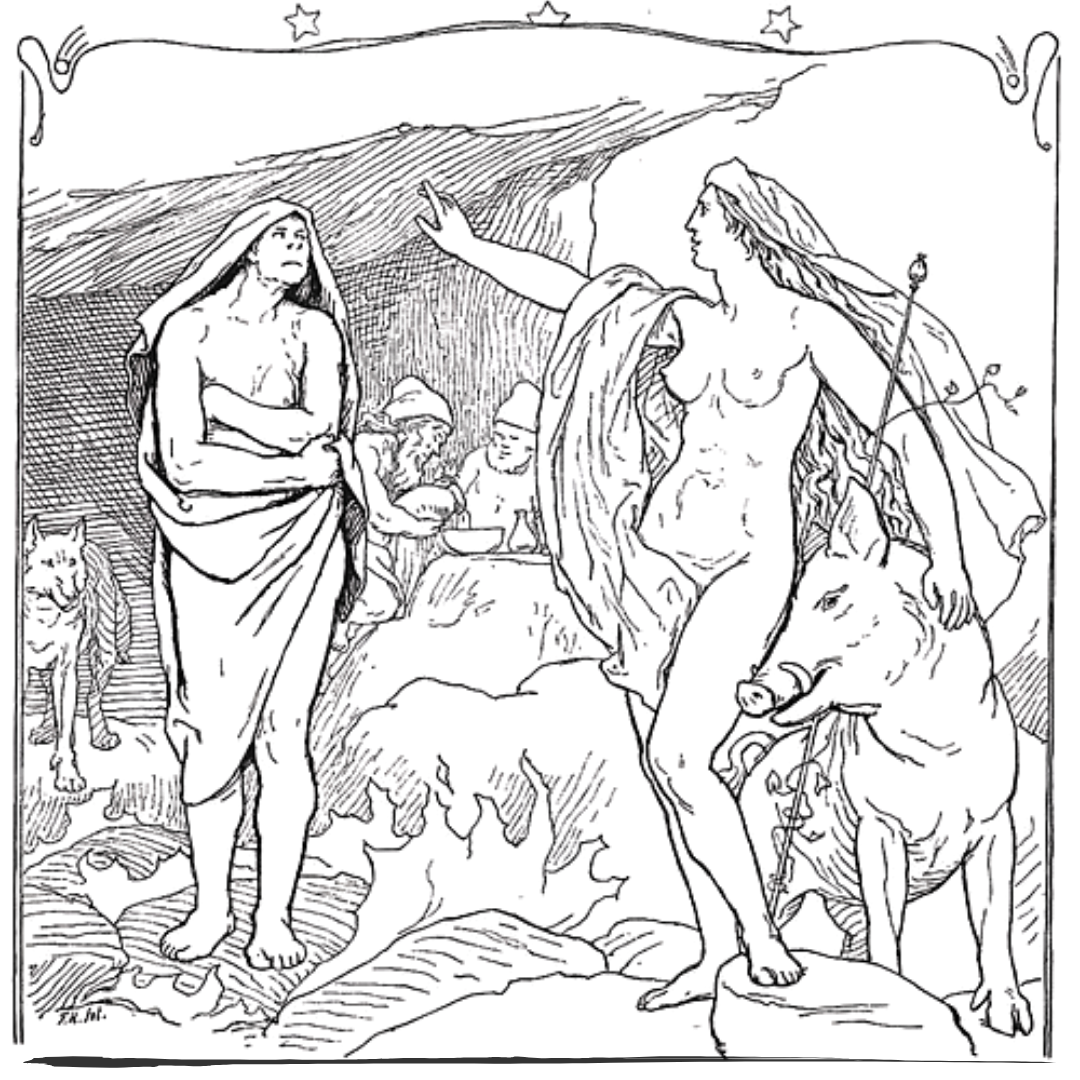
a note on the goddess of self-love
In Norse mythology, Freyja is a goddess of love, beauty, magic, and fierce independence. A member of the Vanir gods, she is especially associated with seiðr, a form of powerful, intuitive magic that connects emotion, spirit, and transformation. Freyja is often depicted wearing a magical cloak of falcon feathers that allows her to travel between worlds, symbolizing freedom, confidence, and self-possession.
Because she embodies sensuality, self-worth, and personal sovereignty, Freyja is a powerful symbol of self-love and inner strength. She reminds us that honoring our desires, protecting our hearts, and embracing our own beauty is a sacred act.
Sources
The Prose Edda, trans. Anthony Faulkes, Everyman, 1995.
The Poetic Edda, trans. Carolyne Larrington, Oxford University Press, 2014.
Norse Mythology, W. W. Norton & Company, 2017.
Dictionary of Northern Mythology, D. S. Brewer, 1993.
read
Drawing Down the Moon by Margot Adler
Rebel Witch by Kelly-Ann Maddox
The Dabbler's Guide to Witchcraft: Seeking an Intentional Magical Path by Fire Lyte
Psychic Witch: A Metaphysical Guide to Meditation, Magick & Manifestation by Mat Auryn
A Year and a Day of Everyday Witchcraft: 366 Ways to Witchify Your Life by Deborah Blake
The House Witch: Your Complete Guide to Creating a Magical Space with Rituals and Spells for Hearth and Home by Arin Murphy-Hiscock
The Green Witch's Garden: Your Complete Guide to Creating and Cultivating a Magical Garden Space by Arin Murphy-Hiscock
The Witch's Book of Self-Care by Arin Murphy-Hiscock
Cunningham's Encyclopedia of Magical Herbs by Scott Cunningham
Llewellyn's Complete Book of Correspondences by Sandra Kynes
The Crystal Bible by Judy Hall
The New Aradia: A Witch's Handbook to Magical Resistance by Laura Tempest Zakroff (ed.)
Witchcraft Activism: A Toolkit for Magical Resistance by David Salisbury
We encourage everyone to support their local library, borrow from a friend, buy books secondhand, buy from your local indie bookstore, or buy from Bookshop.org.